For decades, the closet was treated as an architectural afterthought—a narrow recess fitted with a single hanging rod, a shallow shelf, and little consideration for the person expected to use it every day. It stored clothing, certainly, but rarely supported the rituals, routines, and private moments that begin and end within its walls.
That era is disappearing.
Today’s custom closet has become one of the most personal rooms in the home: part dressing suite, part organizational system, and part private retreat. It is where architecture meets habit, where craftsmanship creates calm, and where possessions are arranged not merely for storage but for ease, visibility, and enjoyment.
This evolution reflects a larger shift in residential design. Homeowners are no longer satisfied with rooms that simply contain their belongings. They want spaces that make daily life feel more considered. A beautifully planned closet can shorten a hectic morning, protect a carefully built wardrobe, eliminate visual clutter, and introduce a quiet sense of ceremony to an otherwise ordinary routine.
“The finest closets do not simply organize what you own—they refine how you begin each day.”
Custom closet design is therefore less about indulgence than intention. The luxury comes not from excess shelving or decorative finishes alone, but from the feeling that every drawer, light, rail, and surface has been designed specifically around the person using it.
A remarkable closet is not measured by its size. It is measured by how naturally it supports the life unfolding inside it.
The Closet Becomes Architecture
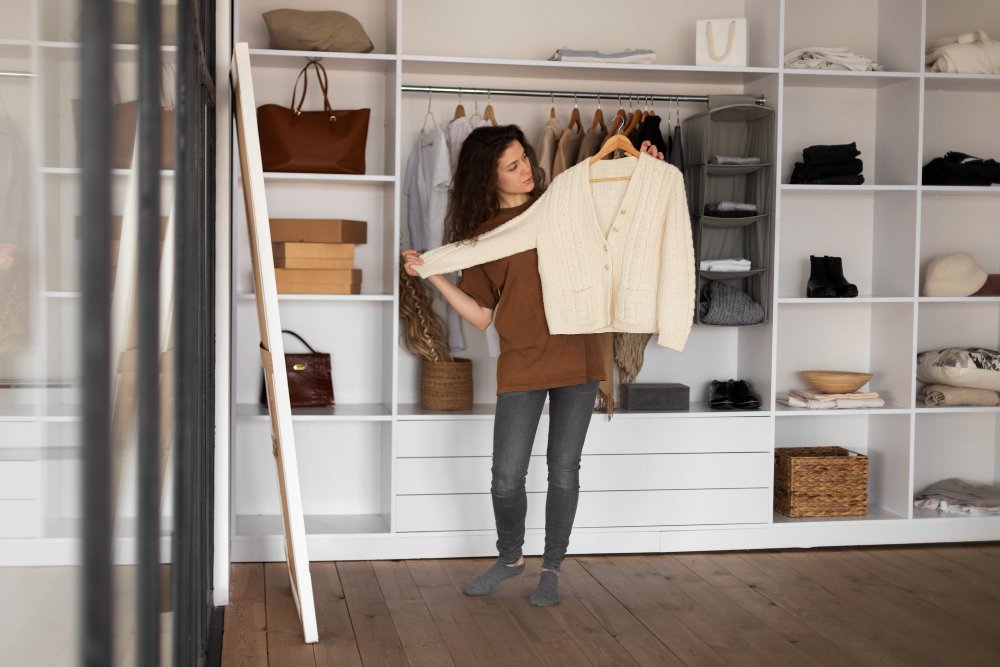
The most compelling modern closets feel permanent. Rather than resembling furniture inserted into an empty room, they appear integrated into the architecture through carefully proportioned cabinetry, continuous millwork, concealed hardware, and finishes that echo the surrounding interiors.
This distinction matters. Generic storage systems often divide a room into repetitive compartments without considering sightlines, ceiling height, natural light, or the visual rhythm of the home. Custom design approaches the closet as an interior composition. Tall cabinetry draws the eye upward. Open shelving creates moments of display. Closed drawers introduce visual calm. Mirrors, seating, and lighting shape how the space is experienced rather than simply how much it can hold.
Materials have also become more refined. Pale oak lends a quiet Scandinavian warmth, while dark walnut creates the atmosphere of a private club. Painted cabinetry in soft mineral shades can make a compact closet feel architectural, and glass-front doors add the polished allure of a luxury boutique. Brass, bronze, leather, and linen introduce tactile contrast without overwhelming the room.
“Storage becomes luxury when utility disappears into craftsmanship.”
The result is a space that feels composed rather than filled. Clothing and accessories remain accessible, yet the room maintains enough restraint to feel peaceful.
Natural wood, soft matte finishes, and discreet hardware continue to dominate premium closet design because they age gracefully. High-gloss surfaces may feel dramatic, but quieter materials often create greater long-term sophistication.
The most elegant closets balance three visual elements: concealed storage for everyday clutter, open display for beautiful objects, and generous negative space so the room never feels overfilled.
Personalization Is the New Standard of Luxury
No two wardrobes function in exactly the same way. One homeowner may need long hanging sections for dresses and coats, while another requires shallow drawers for watches, jewelry, and folded knitwear. A collector may want illuminated shoe displays; a minimalist may prefer seamless doors concealing nearly everything.
This is why the best closet projects begin with an inventory rather than a catalog.
Designers increasingly study how clients dress, what they reach for most often, which items require protection, and where frustration occurs in the existing space. That information shapes the interior architecture. Double-hang rails expand capacity for shirts and trousers. Full-extension drawers reveal every item at a glance. Pull-out valet rods make outfit planning easier. Velvet-lined inserts protect delicate accessories, while adjustable shelving ensures the system can evolve as the wardrobe changes.
A truly personal closet may also incorporate a vanity, a packing station, concealed laundry storage, or a bench positioned precisely where it is most useful. These details are not ornamental. They create efficiency, and efficiency is one of the most valuable expressions of luxury.
The contemporary closet is designed around behavior, not standard dimensions.
Lighting plays a decisive role in this experience. Integrated LEDs beneath shelves make colors and textures easier to distinguish. Illuminated hanging sections prevent dark corners. Motion sensors introduce effortless functionality, while a pendant or sculptural ceiling fixture can transform a walk-in closet into a genuine room rather than a storage annex.
“Personalization is not about adding more features. It is about eliminating every feature that does not serve you.”
The most useful upgrades are often the least visible: soft-close hardware, properly spaced hanging sections, full-extension drawers, concealed outlets, and lighting with accurate color rendering. These details shape the daily experience long after decorative trends have faded.
Expanding Space Without Expanding the Home
One of the most interesting developments in custom closet design is the rise of strategic expansion. Homeowners increasingly realize that gaining a more functional closet does not always require adding square footage. It may require redistributing it.
An underused bedroom can become a dressing suite. A poorly planned hallway can be absorbed into a primary closet. Deep but inefficient reach-in storage can be reconfigured into shallower, better-organized cabinetry. Even the space beneath a staircase or around an awkward corner can be transformed through precise millwork.
This approach represents a more intelligent kind of remodeling. Instead of building outward, designers look inward, identifying square footage that already exists but is not performing effectively. The objective is not simply to make the closet larger—it is to make the home work harder.
Compact closets benefit especially from this thinking. Double-hang systems, pull-out racks, rotating corner mechanisms, and vertical storage can dramatically increase capacity without making the space feel crowded. Mirrored surfaces and integrated lighting enhance depth, while floor-mounted cabinetry may be replaced with suspended elements to reveal more of the floor and create visual openness.
Larger walk-ins, by contrast, can be treated almost like private salons. Islands provide drawer storage and a surface for folding or packing. Upholstered seating introduces softness. Display cabinets protect treasured pieces while turning them into part of the room’s aesthetic.
More shelving does not automatically create better storage. The strongest designs reduce wasted depth, improve visibility, and position frequently used items within comfortable reach.
The true achievement is not fitting more into the closet. It is creating a room in which everything feels easier to find, easier to maintain, and easier to enjoy.
The New Meaning of Everyday Luxury
There is an emotional dimension to organization that design has only recently begun to acknowledge. Clutter creates visual pressure. Poor storage adds friction to familiar routines. A well-planned closet, by contrast, can establish calm before the day has fully begun.
This is where the idea of the closet as a sanctuary becomes more than a marketing phrase. The room offers privacy, order, and a moment of transition between the intimate self and the outside world. Thoughtful lighting flatters rather than overwhelms. Materials feel warm beneath the hand. Drawers open silently. Clothing is visible, protected, and arranged with purpose.
“The new luxury is not owning more. It is living beautifully with what you have.”
Sustainability is increasingly central to this philosophy. Responsibly sourced timber, low-emission finishes, durable hardware, and modular components allow custom closets to remain useful through changing lifestyles. Unlike temporary storage furniture, well-crafted cabinetry can be adjusted, refinished, and preserved for decades.
Technology will continue shaping these spaces through automated lighting, wardrobe lifts, climate-sensitive storage, and digital inventory tools. Yet the most enduring closets will resist becoming overly mechanical. Innovation works best when it disappears into the background, leaving the room feeling intuitive, composed, and unmistakably human.
A future-ready closet should be adaptable rather than fashionable. Adjustable interiors, timeless materials, and quality construction will outlast highly specialized features designed around temporary trends.
The custom closet has evolved because homeowners have begun expecting more from every part of the home. Storage is no longer enough. The room must organize, protect, illuminate, and inspire.
When those qualities come together, the closet becomes something far more compelling than a place to keep clothing. It becomes a private expression of identity, an exercise in craftsmanship, and a daily reminder that thoughtful design can elevate even the most familiar moments.